In the high-velocity engineering culture of 2026, "it feels slow" is no longer an acceptable diagnosis for a pipeline. To maintain a competitive edge, organizations must transition toward data-driven Performance management. By establishing a clear set of Build performance metrics, DevOps teams can transform their CI/CD systems from a black box into a transparent, high-efficiency engine. The goal is simple: eliminate wait times, optimize resource spend, and ensure that your infrastructure scales as fast as your code.
1. The Problem: Flying Blind in the DevOps Lifecycle
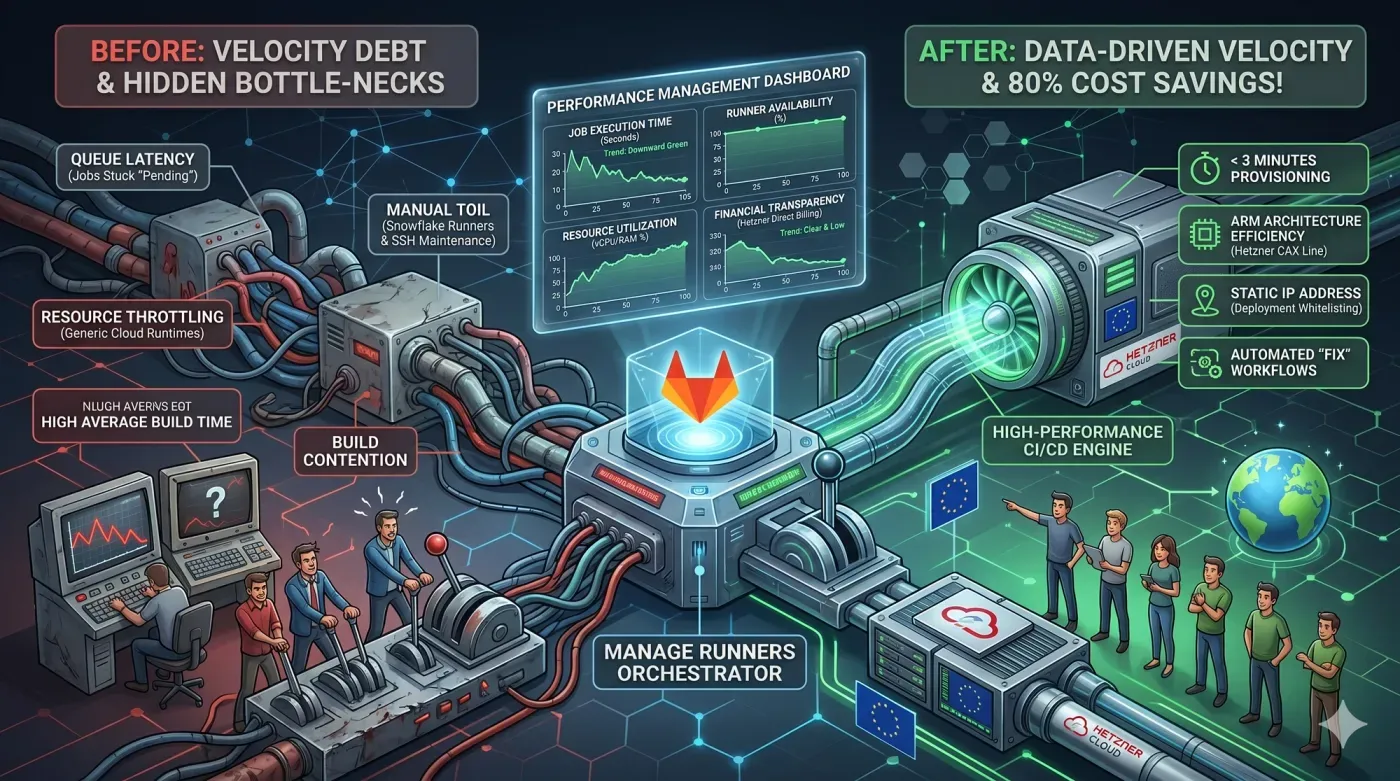
Most teams treat CI/CD as a set-it-and-forget-it system. Without active Performance management, pipelines slowly degrade. Hidden bottlenecks like bloated container images, unoptimized test suites, or underpowered runners creep in. Eventually, developers stop pushing code frequently because they dread the hour-long wait for a green checkmark. This "velocity debt" is the silent killer of agile teams.
2. The Agitation: Why "Average" Build Times are Deceptive
Relying on a single number to judge health is a trap. If you don't dig into specific build performance metrics, you miss the real issues. Consider the impact of:
- Queue Latency: Your runners are idle, yet jobs sit in "pending."
- Resource Throttling: Using generic cloud instances that throttle CPU during heavy builds.
- Financial Leakage: Paying premium rates for "managed" runners that deliver sub-optimal performance.When your infrastructure isn't aligned with your workload, you aren't just losing time you're hemorrhaging budget on inefficient compute.
3. The Solution: Data-Driven Performance Management
Effective performance management requires measuring the right indicators and acting on them with the right tools. Focus on these three pillars:
- Job Execution Time: The raw duration of your tasks.
- Runner Availability: Ensuring specific runners are ready for high-priority projects.
- Resource Utilization: Matching the hardware (vCPU/RAM) to the specific needs of the job.
4. Technical Implementation: Measuring and Optimizing
To truly optimize, you must move away from manual server maintenance. Modern performance management relies on Infrastructure as Code (IaC) to ensure consistency.
# Example: Optimizing a Build Job with Specific Runner Tags
# Using a dedicated Hetzner ARM64 runner for better performance-per-dollar
optimize_build:
  stage: build
  tags:
    - hetzner-arm-64 # Provisioned via Manage Runners
  variables:
    DOCKER_DRIVER: overlay2
  script:
    - echo "Executing high-concurrency build on optimized hardware..."
    - docker buildx build --platform linux/arm64 -t my-app:latest .
5. Scaling with Manage Runners and Hetzner Cloud
The most effective way to act on your Build performance metrics is through automated runner orchestration. Manage Runners bridges the gap between raw Hetzner Cloud power and your CI/CD dashboard.
| Metric | Traditional Setup | Manage Runners (Automated) |
|---|---|---|
| Provisioning Speed | 30+ Minutes | < 3 Minutes |
| Hardware Choice | Limited/Static | Custom (ARM, x86, DinD) |
| Cost Control | Opaque/High | Direct Billing (80% Savings) |
| Reliability | Manual Fixes | Guided "Fix" Workflows |
Manage Runners empowers you to implement professional-grade Performance management by allowing 1-click duplication of successful runner configurations. Whether you need a Static IP address for secure deployments or precision scheduling to stop paying for idle time, the platform handles the toil so you can focus on the metrics that matter.
6. Conclusion
Mastering your Build performance metrics is the first step toward a resilient, cost-effective pipeline. By moving your infrastructure to Hetzner Cloud via Manage Runners, you secure a 100% uptime environment that is built for speed and financial transparency.
Ready to reclaim your DevOps budget and accelerate your builds? [Start your Performance Management journey with Manage Runners today] and experience the power of automated CI/CD.