In the 2026 tech economy, lean operations are the hallmark of successful startups. For small development teams, CI/CD infrastructure often represents a significant "hidden" expense that scales faster than revenue. Implementing effective cost reduction strategies is no longer just about cutting features; it’s about architectural intelligence. By learning how to reduce cloud costs through optimized resource allocation and provider choice, small teams can reclaim up to 80% of their DevOps budget without sacrificing build velocity.
1. The Problem: The "Big Cloud" Tax on Small Teams
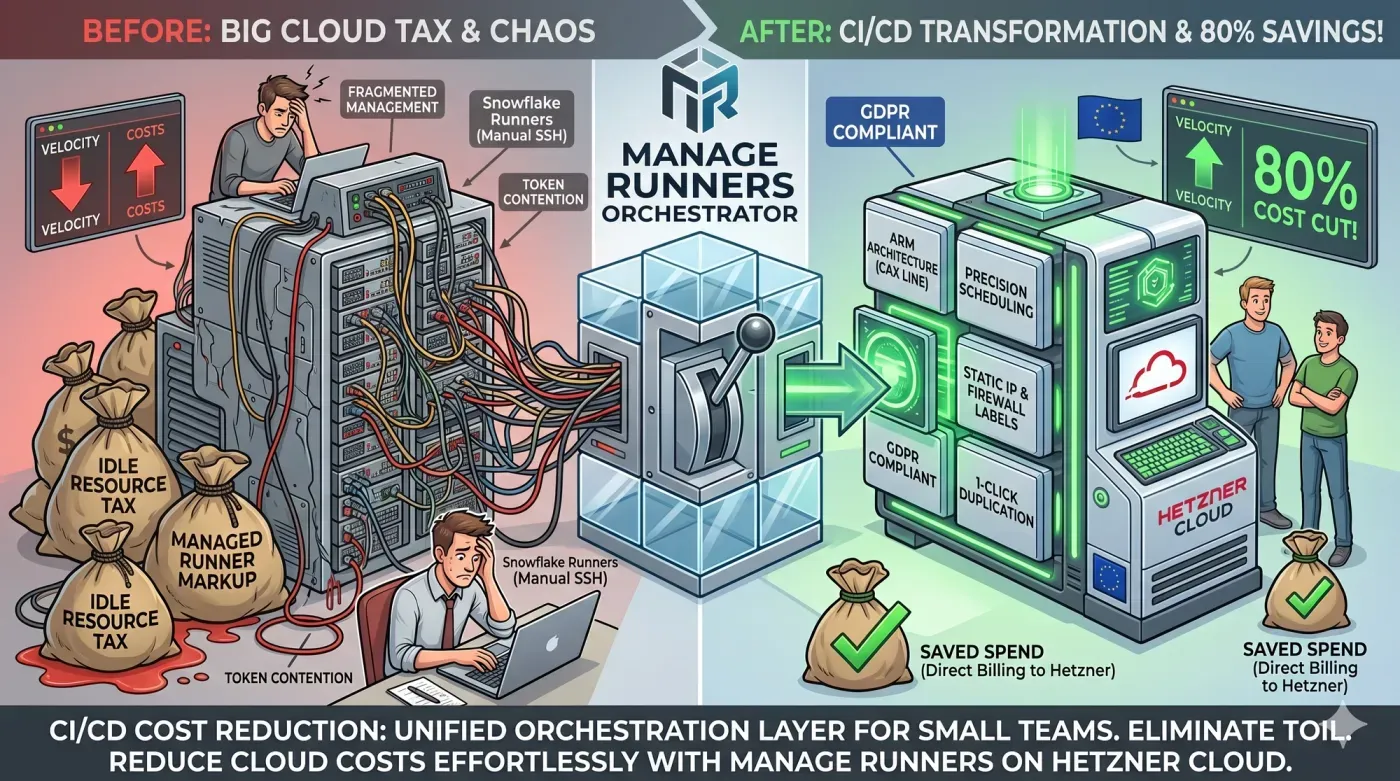
Many small teams default to managed runners provided by major platforms or deploy self-hosted runners on expensive "Big Three" cloud providers. While convenient, these services often come with a 3x to 5x markup on raw compute power. For a team running multiple builds a day, these costs accumulate into thousands of wasted dollars per year money that could be better spent on product development or talent.
2. Agitating the Drain: Idle Resources and Manual Toil
The financial leak usually stems from two areas: idle time and maintenance labor.
- Idle Time: Paying for 24/7 runner availability when your team only codes for 8–10 hours a day.
- Manual Toil: If you try to save money by self-hosting, you often end up "paying" in engineer hours spent patching, securing, and troubleshooting runner registration tokens.Without a strategy to reduce cloud costs, you either overpay for managed convenience or lose your most expensive asset developer time to infrastructure maintenance.
3. The Solution: Strategic Infrastructure and Automation
The most effective cost reduction strategies for 2026 involve moving toward "Direct Infrastructure" models. This means paying for raw, high-performance compute directly while using a specialized orchestration layer to handle the DevOps heavy lifting.
- Provider Arbitrage: Transitioning CI/CD workloads to high-performance, low-cost providers like Hetzner Cloud.
- Modern Architecture: Leveraging ARM-based servers (like Hetzner’s CAX line), which offer superior performance-per-dollar compared to traditional x86 instances.
- Precision Scheduling: Automatically shutting down runners during off-peak hours to ensure you only pay for what you use.
# Example: Cost-Optimized GitLab CI Configuration
# Utilizing high-performance ARM runners on Hetzner
build_and_test:
  stage: test
  tags:
    - hetzner-arm-runner # Provisioned via Manage Runners
  script:
    - echo "Running tests on CAX11 instance (approx. $4/month)"
    - npm install
    - npm test
4. Manage Runners: The Catalyst for Cloud Cost Reduction
Manage Runners was designed specifically to help small teams implement these cost reduction strategies with zero operational overhead. By providing a centralized, glassmorphism-inspired dashboard to manage GitLab runners on Hetzner Cloud, it bridges the gap between low-cost hardware and high-end automation.
| Traditional Managed Runner | Manual Self-Hosted | Manage Runners + Hetzner |
|---|---|---|
| Cost: $0.01+/min | Cost: $20+/mo (Plus Toil) | Cost: ~$4/mo (80% Less) |
| Setup: Instant | Setup: 60+ Minutes | Setup: < 3 Minutes |
| Billing: Bundled/Marked up | Billing: Direct | Billing: Direct (No Markup) |
Through Manage Runners, teams can reduce cloud costs instantly by leveraging:
- Direct Billing: You pay Hetzner directly for compute; Manage Runners provides the control plane for a flat, low monthly fee.
- 1-Click Duplication: Scale your build fleet or replicate environments in seconds without manual SSH scripts.
- Static IP & Security: Every runner gets a Static IP address and automated Hetzner Firewall labeling, ensuring your secure remote access doesn't break when you optimize costs.
5. Conclusion
A small team doesn't need a massive budget to have world-class CI/CD infrastructure. By focusing on cost reduction strategies like hardware right-sizing and automated scheduling, you can build a faster, more secure pipeline for a fraction of the traditional cost.
Stop overpaying for your DevOps infrastructure. [Start your journey with Manage Runners today] and see how easy it is to reduce cloud costs while boosting your team's performance.